
Garage Cabinets Care Guide: What to Do Daily, Monthly, and Yearly
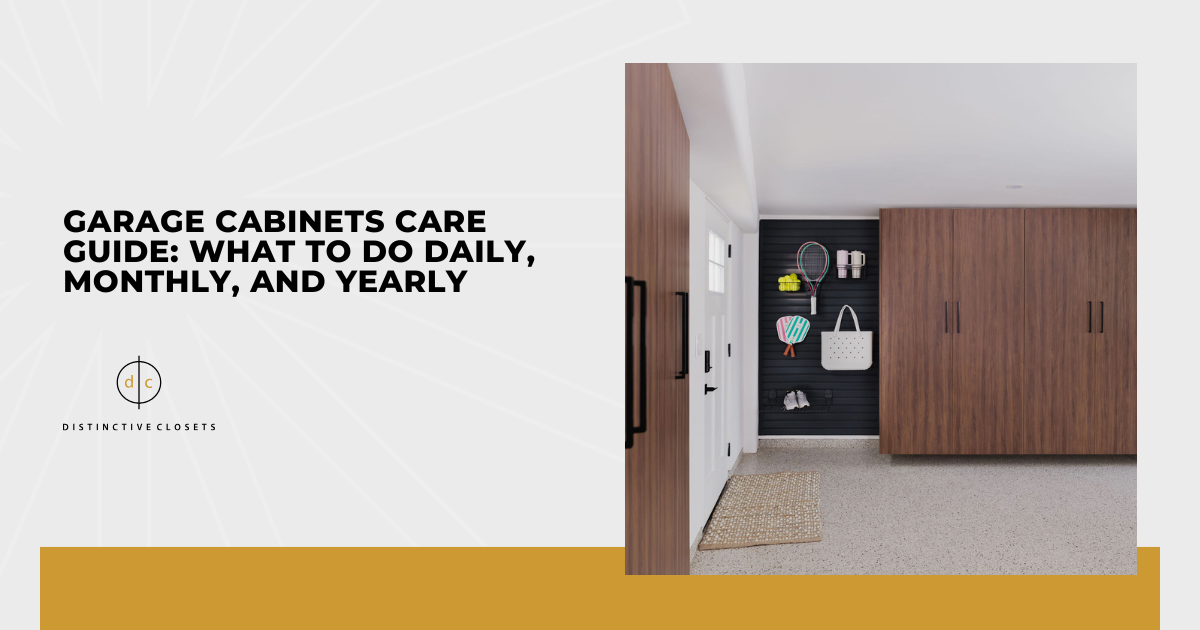
Your garage cabinets work hard every single day, holding everything from power tools and paint cans to sports gear and seasonal decorations. Like any hardworking part of your home, they need regular attention to stay in top shape. In my years of working with homeowners, the ones who stay consistent with upkeep almost always end up with cabinets that look and function like new well beyond what you'd expect.
Most homeowners don't think about cabinet maintenance until something goes wrong, like a drawer that won't close or a door hinge that's come loose. But staying ahead of those issues is much easier than fixing them after the fact. Breaking your care routine into daily, monthly, yearly, and seasonal tasks makes the whole process feel manageable and straightforward. It’s a simple framework that protects your investment without demanding too much of your time.
This care guide walks you through everything you need to keep your garage cabinets in great shape, from quick daily habits to seasonal maintenance tips:
- Simple daily habits that prevent long-term damage
- Monthly checks that keep hardware in good shape
- Yearly tasks that protect your cabinet's structure and finish
- Protecting your storage system during hot and humid months
- Getting your cabinets ready for cold weather
Whether you're brand new to garage organization or just looking to be more intentional about upkeep, there's something here for every homeowner. Let's get into it.
Simple Daily Habits That Prevent Long-Term Damage
When it comes to garage cabinet care, the smallest habits often make the biggest difference. You don't need to dedicate a lot of time each day to keep your cabinets in great shape. A few quick, intentional actions at the end of every garage session can prevent the kind of buildup and wear that leads to costly repairs down the road. Think of these as non-negotiables that take no more than a few minutes but pay off significantly over time.
- Wipe Down Cabinet Surfaces After Every Use: Garages are naturally dusty and greasy environments, and that grime builds up faster than you'd expect. A quick wipe with a damp microfiber cloth and a mild soap-and-water solution is all it takes to protect your cabinet's finish.
- Close Cabinet Doors and Drawers Fully: Leaving doors or drawers partially open exposes your cabinet interiors to humidity fluctuations and pests. A quick check before you leave the garage is a simple habit that protects both your cabinets and what's stored inside them.
- Return Items to Their Designated Spots: Overloading shelves or cramming drawers puts unnecessary strain on the cabinet structure. Even weight distribution across your shelves and drawers prevents premature wear on hinges, slides, and the cabinet frame itself.
These daily habits are easy to overlook, especially on busy days when you're rushing in and out of the garage. In my experience, homeowners who stick to these small routines almost never deal with the kind of hardware failures and surface damage that seem to catch others off guard. Starting small and staying disciplined with these simple steps will make every other level of maintenance easier and less time-consuming.
Monthly Checks That Keep Hardware in Good Shape
Your garage cabinets take a lot of daily use, and that wear quietly accumulates in the hinges, drawer slides, and other hardware that keeps everything functioning smoothly. Setting aside a little time each month to check on these components is one of the most effective ways to stay ahead of bigger problems. It doesn't have to be a lengthy process; a quick but thorough once-over is usually all it takes. Catching issues early almost always means a simpler, cheaper fix.
- Inspect Hinges, Handles, and Drawer Slides for Looseness or Wear: Gently tug on handles and knobs to check for loose screws, and open and close each door and drawer to feel for resistance or misalignment. A loose hinge caught early is a quick fix with a screwdriver; left too long, it can mean a stripped screw hole or a door that no longer hangs correctly.
- Clean Cabinet Interiors and Remove Unused Items: Cabinet interiors can quickly become a catch-all for things you no longer need, and that clutter adds unnecessary weight to your shelves. Pull everything out, wipe down the interior walls and shelves, and dispose of old chemicals, expired lubricants, or duplicate tools you've been holding on to.
- Lubricate Drawer Slides and Hinges to Keep Things Moving Smoothly: A dry hinge or drawer slide creates friction that leads to premature wear and that frustrating grinding or sticking sensation. Applying a silicone-based lubricant to your hinges and drawer slides once a month keeps everything operating the way it should.
Monthly maintenance doesn't demand much, but skipping it consistently is how small issues snowball into major ones. A drawer that sticks, a hinge that wobbles, or a cabinet packed with items it shouldn't be holding are all problems that are far easier to address when caught early. Building this monthly check into your routine is one of the smartest things you can do for the long-term health of your garage storage system.
Yearly Tasks That Protect Your Cabinet's Structure and Finish
Some aspects of garage cabinet care simply can't be addressed with a quick daily wipe or a monthly hardware check. Once a year, it's worth setting aside more dedicated time to tackle the deeper maintenance tasks that protect your cabinets at a structural level. These are the jobs that keep small, invisible issues from turning into expensive problems down the road. A single annual session can make a significant difference in how long your cabinets hold up.
- Recaulk or Reseal Gaps Around Wall-Mounted Cabinets: As your home naturally shifts and settles, small gaps can develop between your wall-mounted cabinets and the wall itself. These openings are entry points for moisture, insects, and cold air, so applying a fresh bead of paintable, waterproof caulk wherever you see separation is a quick but important fix.
- Deep-Clean and Refinish or Touch Up Cabinet Exteriors: An annual deep-clean goes further than your regular surface wipes, targeting buildup in corners, along edges, and around hardware that everyday cleaning tends to miss. Don't skip the prep work either, since a clean, lightly sanded surface helps any new paint, stain, or sealant adhere properly and last longer.
- Evaluate Your Cabinet Layout and Reorganize if Needed: Your storage needs evolve, and your cabinet system should keep up. Once a year, honestly assess whether your current layout is still working for you and redistribute items to make sure no single cabinet or shelf is being consistently overloaded.
Your yearly maintenance session is also a good opportunity to step back and look at the bigger picture of your garage storage system. Consider whether any additional shelving, drawer inserts, or cabinet accessories would improve how the space works for you. Small, well-timed upgrades can extend the life of your existing cabinets while making your garage more functional overall. A system that fits your habits and needs will always be easier to care for.
Protecting Your Storage System During Hot and Humid Months
Spring and summer bring rising temperatures and humidity levels that can quietly take a toll on your garage cabinets if you're not paying attention. Wood cabinets are especially vulnerable, as moisture in the air can cause them to swell, warp, or develop mold over time. Metal cabinets aren't immune either, since heat and humidity create the right conditions for rust and corrosion to develop. A few seasonal precautions can go a long way in keeping your cabinets stable and damage-free through the warmer months.
- Check Cabinet Doors and Drawers for Swelling or Misalignment: Humidity can cause wood and even some laminate cabinets to expand, making doors and drawers harder to open and close. If you notice sticking or resistance, address it early before the swelling puts unnecessary stress on your hinges and slides.
- Inspect for Moisture and Mold Inside Cabinet Interiors: Warm, humid air can cause condensation to build up inside your cabinets, creating the right conditions for mold and mildew to develop. Wipe down interiors, make sure items stored inside are dry, and consider placing moisture-absorbing packets in cabinets that are prone to dampness.
Humidity-related damage is one of the most common issues I see in garages that otherwise have a solid maintenance routine in place. Keeping your garage well-ventilated during the warmer months makes a big difference, and a dehumidifier or a well-placed fan can help regulate moisture levels effectively. Small seasonal adjustments like these complement your regular maintenance routine and keep your cabinets in consistently good shape year-round.
Getting Your Cabinets Ready for Cold Weather
As temperatures drop in fall and winter, your garage cabinets face a different set of challenges than they do in the warmer months. Cold air is typically drier, which can cause wood cabinets to contract and develop small cracks in the finish over time. Metal cabinets, on the other hand, are more susceptible to condensation when cold surfaces meet warmer air, which creates the right conditions for rust to develop. Getting ahead of these seasonal changes before the cold fully sets in is always easier than dealing with the damage afterward.
- Reseal or Touch Up Cabinet Finishes Before Winter: Cold, dry air can penetrate small cracks in your cabinet's finish and cause them to worsen over the season. Applying a fresh coat of sealant or touching up any chipped or worn areas in the fall gives your cabinets a protective layer that holds up through the colder months.
- Check for Drafts and Seal Any Gaps Around Wall-Mounted Cabinets: Cold air seeping in through gaps between your cabinets and the wall can affect both the cabinet material and what's stored inside. Inspecting and recaulking these areas before winter arrives keeps your cabinets better insulated and protects them from temperature-related stress.
Taking a proactive approach to cold weather cabinet care doesn't require much time, but the payoff is significant. Make sure any items stored in your cabinets that are sensitive to freezing temperatures, like certain paints, lubricants, or adhesives, are relocated to a warmer space for the season. A little preparation in the fall sets your cabinets up to come through winter without any unnecessary wear or damage.
Conclusion
Your garage cabinets don't need constant attention, but they do need consistent care. By building simple daily habits, staying on top of monthly checks, tackling a few yearly tasks, and preparing your cabinets for seasonal changes, you can keep your storage system looking great and functioning well for the long haul. What I've seen time and again is that homeowners who follow a routine like this almost always avoid the costly repairs and premature replacements that come from neglect. Start with the small stuff, stay consistent, and your garage cabinets will hold up far better than you might expect.
OUR COMPANY
Distinctive Closets & Garage has been installing affordable custom closet and garage organization systems since 2005. Whether you are a custom home builder or remodeling your existing home, we focus on your individual needs and listen to what you want to accomplish. Our knowledge and expertise of both the design and installation process will ensure that the new spaces in your home will be functional as well as beautiful. We look forward to earning your business and exceeding your expectations. Ed Hammill - Owner
QUICK LINKS
CALL US DIRECTLY
COMPANY HOURS
Monday - Friday: 9am - 6pm
Saturday - Sunday: By Appointment